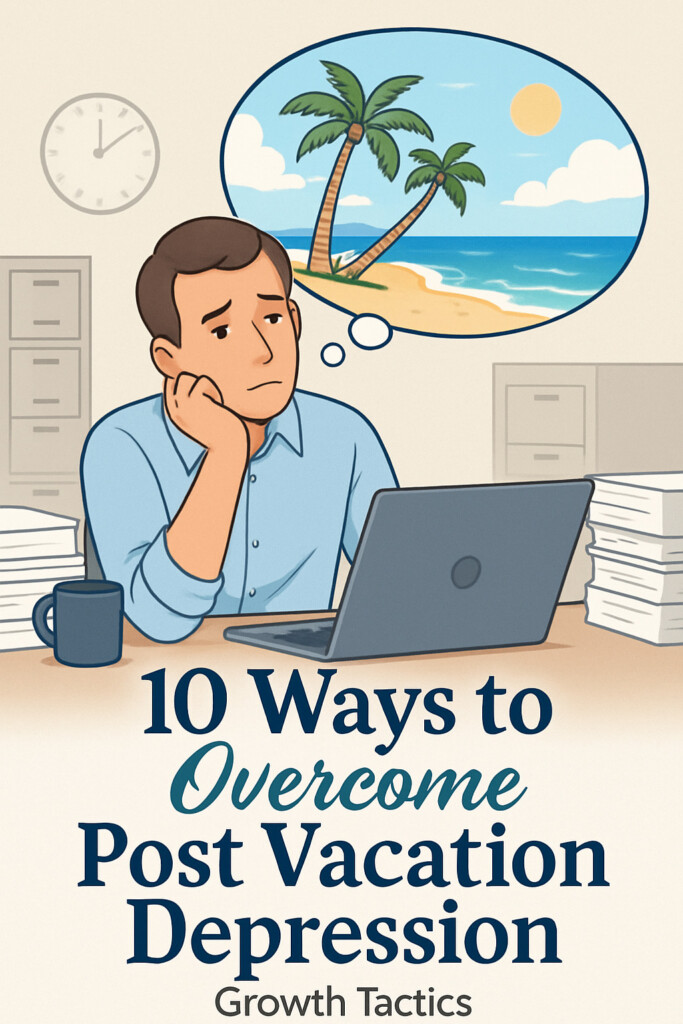
You finally come back from vacation, drop your bags, and… your mood drops too. The trip was amazing, but now your regular life feels dull, heavy, or stressful. That emotional crash can be confusing, especially if you “should” feel grateful.
If this is you, you’re not broken. Post-vacation depression is common. The good news: you can take practical steps that help ease the transition and protect your health and well-being.
Jump To Section
Post-Vacation Depression: What It Is and Why It Hits So Hard
Post-vacation depression describes a low mood that shows up after the end of your vacation. People often call it the post-vacation blues, and it can overlap with the post-holiday blues. The terms get used interchangeably, but there are differences.
Think of it like stepping off a moving walkway at the airport. Your body keeps “moving” for a moment, but the ground has stopped. Your mind does something similar when vacation ends.
Post-vacation blues vs. post-vacation depression vs. post-holiday blues
- Post-vacation blues: mild sadness, irritability, or low motivation after returning home. It often fades as you readjust.
- Post-vacation depression: deeper or longer-lasting feelings of depression that may affect everyday life and functioning.
- Post-holiday blues: similar dip that can happen after big events (holidays, weddings, school breaks), not just travel.
You can have a great trip and still feel sad when you return from vacation. That’s not a contradiction. It’s “emotional whiplash.”
On vacation, your brain gets fewer demands and more freedom. Back from vacation, you face schedules, chores, and work stress again. The contrast can make dissatisfaction with life feel louder than usual.
Is What You’re Feeling Normal, or Something More Serious?
Many people feel sad or flat after they come back from vacation. You might also feel anxious, restless, numb, or easily annoyed. Some people feel guilty for not feeling happy.
A temporary dip can be normal. Your mind and body need time to readjust.
But symptoms can also persist and become a bigger mental health condition. The key is duration, intensity, and how much it disrupts your normal routine.
Common signs
- Feeling sad, tearful, or empty
- Low motivation to return to work or school
- Irritability with family or coworkers
- Anxiety about emails, deadlines, or money
- Trouble sleeping (or sleeping too much)
- A “what’s the point” feeling
- Less interest in things you usually enjoy
Quick Self-Check: How Long Has This Been Going On and How Intense Is It?
Use this quick check to get clarity. You don’t need a perfect answer. You just need a snapshot.
Time frames that matter
- First 72 hours after returning home: mood dips are very common, especially with jet lag or sleep debt.
- First 2 weeks: many people improve as they settle into regular life.
- Beyond 2 weeks: take symptoms more seriously, especially if they interfere with everyday life.
Red flags to watch
- Persistent feelings of sadness most days
- Hopelessness or feeling “stuck”
- Big changes in sleep or appetite
- Loss of interest in most activities
- Increasing alcohol or substance use
- Thoughts of self-harm
The “functioning test”
Ask yourself:
- Can I do basic self-care (shower, meals, errands)?
- Can I show up for work or school at a basic level?
- Am I pulling away from people I care about?
If your answer is “no” to several of these, it’s a sign to seek help.
When Could This Signal Clinical Depression or Another Mental Health Condition?
Post-vacation depression may sometimes be the first sign of clinical depression. Clinical depression typically lasts at least two weeks and causes real impairment.
It can also overlap with:
- Burnout (especially if you have a stressful job)
- Anxiety disorders
- Seasonal mood changes
- Grief or loss (a trip can stir feelings you kept quiet)
- Sleep disorders
If you suspect something bigger than the post-vacation blues, consider talking to a mental health professional. A licensed clinical therapist, counselor, or behavioral health clinic can help you sort out what’s going on.
If you are in immediate danger or thinking about self-harm, call or text the lifeline at 988 (U.S.) right now.
Why Post-Vacation Depression May Happen
This crash is not just “all in your head.” Your brain, body, and environment all shift at once.
Here are the most common drivers.
The brain’s reward system: novelty and the dopamine drop
Vacation may give your brain a steady stream of “new.” New places, new foods, new conversations. Your reward system loves that.
Then you return to work, and everything is familiar. Familiar can be comforting, but it’s not as stimulating. That drop can feel like a mood dip.
Loss of autonomy: freedom vs. obligations
On vacation, you choose most things. When you’re returning home, you react to demands.
That shift can feel like going from driving the car to sitting in the back seat.
Social contrast
On a trip, relationships can feel lighter. You laugh more. You talk without distractions. Then you come home and fall back into old roles and routines.
That contrast can create feelings of depression, even if nothing is “wrong” at home.
Financial stress and vacation guilt
Money stress can hit hard after time away. It can also carry a subtle shame: “I spent too much” or “I don’t deserve time off.”
That guilt can intensify the crash.
How Work Stress and a Stressful Job Amplify the Crash
Returning to work often brings an “inbox shock.” You open email and it feels like you never left.
Work stress also grows when:
- priorities are unclear
- you have little control over your schedule
- your workload piled up while you were away
Sometimes the trip exposes burnout. The vacation was proof you needed rest. Coming back makes the gap obvious.
Jet Lag, Sleep Debt, and the “Body Lag” You Don’t Notice Until You Return to Work
Jet lag can mimic depression. You feel tired, foggy, and low. You may mistake that fatigue for sadness.
Vacation often includes:
- later nights and earlier mornings
- more alcohol
- heavier meals
- less consistent physical activity
When you return from vacation, your body tries to catch up. Mood can dip during that repair.
Before You Fix It: Identify Your Post-Vacation Trigger Profile
Here’s a simple framework to target your coping strategies. Think of your symptoms as coming from three buckets. Most people have a mix.
The 3-bucket framework
| Bucket | What it includes | Common clues | Best first moves |
|---|---|---|---|
| Biological | jet lag, sleep debt, low movement, poor nutrition | brain fog, fatigue, headaches | sleep reset, light, hydration, gentle physical activity |
| Psychological | expectations, meaning, identity, control | rumination, “my life is boring,” anxiety | values check, small goals, mindset shifts |
| Environmental | workload, clutter, finances, social support | overwhelm, irritability, dread | work triage, home reset, money plan, social reconnection |
Pick your top bucket. Start there. Quick wins build momentum.
What Did Vacation Give You That Regular Life Isn’t?
This question can change everything. Don’t focus on the destination. Focus on the need.
Try a mini-audit:
- List your top 3 moments from the trip.
- Write what each moment gave you.
Examples:
- “Coffee by the ocean” → calm, nature, slow mornings
- “Hiking with friends” → connection, movement, laughter
- “No emails” → control, mental space, freedom
Now you have a map. You can recreate parts of those needs at home, even in small ways.
10 Ways to Overcome Post-Vacation Depression (Practical, Doable, Evidence-Informed)
Each strategy includes: what to do today, why it helps, and a pitfall to avoid. Mix and match based on your trigger profile.
1) Use the 48-Hour Landing Plan Instead of Diving Straight Into Everything
Do today: Block two days for “light re-entry.” Do only basic admin: groceries, laundry, simple meals, and a quick calendar review.
Why it helps: Your brain needs a buffer between relaxation and full-speed obligations. This reduces the shock of returning home.
Pitfall: Trying to “catch up” on everything in one night. That turns your first days back into a punishment.
If you already came back from vacation and went straight into work, you can still do this. Take two lighter evenings and a softer weekend.
2) Don’t Try to Recreate the Trip: Recreate the Feeling
Do today: Name the core feeling you loved most:
- calm
- awe
- freedom
- connection
- play
Then pick one small ritual that matches.
Examples:
- Calm: 10 minutes of tea on the porch before screens
- Awe: a short sunset walk
- Freedom: one hour with no plans on your calendar
- Connection: call a friend during a walk
- Play: a casual game night, not a “perfect” party
Why it helps: Your brain responds to emotional patterns, not plane tickets.
Pitfall: Comparing your Tuesday night to a beach resort. That comparison will always hurt.
3) Reverse the “Inbox Avalanche” With a Work Re-Entry Script
Do today: Use a simple 3-step process for your first workday back.
- Triage: scan, don’t answer. Flag only urgent items.
- Time-block: schedule 2–3 focused blocks for email and tasks.
- Communicate: set expectations early.
Message template to your manager/team:
“I’m back today and reviewing what came in while I was out. My top priorities this week are X, Y, and Z. If anything needs attention sooner, please message me and I’ll re-triage.”
Why it helps: Work stress drops when you regain control and clarity.
Pitfall: Treating every email like a fire.
4) Plan One “Anchor Event” Within 7 Days to Bridge the Gap
Do today: Put one meaningful event on the calendar within a week. Keep it simple.
Ideas:
- dinner with a friend
- a museum or local event
- a day trip
- a class (yoga, pottery, cooking)
- volunteering for one hour
Why it helps: When vacation ends, your brain can feel like the fun is “over.” An anchor event proves it isn’t.
Pitfall: Overplanning to the point of exhaustion. One solid plan beats five stressful ones.
Planning your next can also help, as long as it doesn’t become your only source of hope.
5) Use Micro-Novelty to Keep Your Brain From Flatlining
Do today: Try a 10-minute daily novelty challenge for one week.
Pick one:
- take a new route to work
- try a new lunch spot
- listen to a new podcast series
- cook one new recipe
- visit a new park
Why it helps: Novelty boosts motivation. It gives your brain a small reward loop in regular life.
Pitfall: Thinking novelty must be expensive or big. Small counts.
6) Move Your Body Like a Traveler: Light, Frequent Physical Activity
Do today: Do 10–20 minutes of easy movement. Walk after a meal. Stretch while the kettle boils. Keep it low-pressure.
Why it helps: Vacation often includes natural movement. At home, we try to “make up” for it with intense workouts. That can backfire.
Light physical activity improves mood and sleep, which helps you readjust faster.
Pitfall: All-or-nothing thinking. A short walk still helps with depression symptoms.
7) Reset Sleep and Beat Jet Lag With a Simple Circadian Protocol
Do today: Pick a consistent wake time for the next 5–7 days. Then do these steps:
- Get morning light within 30 minutes of waking (even cloudy light helps).
- Keep caffeine to the first half of the day.
- Avoid long naps. If needed, nap 20 minutes max.
- Dim lights and screens in the last hour before bed.
Why it helps: Sleep repair can resolve “feelings of depression” faster than you expect, especially after jet lag.
Pitfall: Sleeping in to “catch up.” It often makes nighttime sleep worse.
8) Do a “Homecoming Reset” to Make Returning Home Feel Good
Do today: Treat your home like a hotel for one night.
- change your sheets
- clear one small area (nightstand or kitchen counter)
- take a warm shower
- eat a simple, comforting meal
Why it helps: Returning home can feel chaotic. A small reset signals safety and calm, which supports behavioral health.
Pitfall: Turning it into a deep-clean marathon. Keep it small and kind.
9) Turn Vacation Photos Into Closure, Not Comparison
Do today: Create a “trip story” in 15 minutes.
- Choose 10 photos.
- Write 5 lines about what you learned.
- Share one highlight with someone, or journal it.
Try this prompt: “What part of me felt most alive on this trip, and how can I honor that at home?”
Why it helps: This gives your brain closure. It turns the trip into meaning, not a standard you can’t meet.
Pitfall: Doom-scrolling your camera roll at midnight. That often increases dissatisfaction with life.
10) If It’s More Than the Blues: Seek Help Early and Strategically
Do today: If symptoms persist beyond two weeks, or you can’t function in everyday life, reach out.
Options include:
- a mental health professional (therapist, psychologist)
- a licensed clinical counselor
- a behavioral health clinic
- your primary care provider
What to say in the first appointment:
- “I notice a mood crash when I return from vacation.”
- “It started on (date), and it affects sleep, appetite, and motivation.”
- “My biggest triggers are work stress and exhaustion.”
- “I’m worried it might be clinical depression.”
Why it helps: Early support can prevent a temporary slump from becoming a deeper spiral.
Pitfall: Waiting until you hit a breaking point. You deserve help with depression before it becomes a crisis.
If you’re in danger or thinking of self-harm, call or text 988 (U.S.). If you’re outside the U.S., use your local emergency number.
A Two-Week Readjustment Roadmap (Day-by-Day Lite Version)
You don’t need a perfect plan. You need a simple path.
Week 1: Stabilize (sleep, structure, workload)
Goals:
- stabilize sleep
- reduce overwhelm
- lower work stress
Daily basics:
- consistent wake time
- 10–20 minutes of physical activity
- one “must-do” task, not ten
Simple tracking (0–10): mood, energy, stress.
| Day | Focus | One action |
|---|---|---|
| 1–2 | Landing | groceries, laundry, early bedtime |
| 3–4 | Work triage | 3 priorities, time blocks, say no to extras |
| 5–7 | Gentle routine | walk daily, simple meals, social touchpoint |
Week 2: Rebuild (meaning, connection, momentum)
Goals:
- add meaning back into regular life
- reconnect socially
- create forward motion
| Day | Focus | One action |
|---|---|---|
| 8–10 | Connection | plan an anchor event, call a friend |
| 11–12 | Micro-novelty | new route, new recipe, new class |
| 13–14 | Values + goals | pick one small goal for the month |
What If You Have to Return to Work or School Immediately?
Sometimes you can’t buffer.
Use “fast triage”:
- Must-do: critical deadlines, essential meetings, basic self-care
- Nice-to-do: extra projects, favors, deep cleaning
- Not now: anything that can wait a week
Try boundary phrases:
- “I can do that next week. This week I’m focused on X.”
- “What’s the priority: speed or quality?”
- “If this is urgent, what should I drop?”
Build mini-recovery pockets:
- 5 minutes outside
- lunch away from your desk
- one short walk between tasks
These small breaks can help ease the crash.
How to Prevent Post-Vacation Depression Next Time (Without Needing a Longer Vacation)
You can reduce the “returning home” hit with a better landing.
Design the end of your vacation
- Add a buffer day at home before returning to work.
- Avoid late-night flights right before a big workday.
- Keep the last day of travel lighter if you can.
Avoid coming back to chaos: a pre-trip prep checklist
Before going on vacation, do a “future you” favor:
- clean one area you’ll see first (entry or kitchen)
- set up one easy meal (frozen option counts)
- pay key bills or schedule payments
- write your Monday “first hour” plan
It’s like making the bed in a hotel. You’re setting yourself up for comfort.
Keep one vacation habit at home
Pick one:
- device-free mornings
- slower meals
- a daily walk
- a weekly nature visit
Small habits keep the benefits of time away alive.
Should You Plan Your Next Vacation Right Away?
Planning your next vacation can help because anticipation boosts mood. But watch for a trap: using planning to avoid your regular life.
A balanced approach:
- Pencil in rough dates and a budget.
- Then focus on weekly joy at home.
- Treat planning as a tool, not a crutch.
When Post-Vacation Blues May Be a Wake-Up Call About Your Life
If you feel this crash every time you come back from vacation, pay attention. It may point to a mismatch.
Common causes:
- burnout from a stressful job
- lack of meaning or growth
- loneliness or relationship strain
- too little rest in your normal routine
You don’t need a dramatic life overhaul to start. Run small experiments:
- ask for one work change (flex hours, fewer meetings)
- add one weekly social plan
- protect one evening for real rest
- try one new hobby for a month
If the sadness is strong and persistent, seek help. A mental health professional can help you look at deeper patterns and create a plan.
Key Takeaways and Next Steps
Post-vacation blues may feel discouraging, but they are common. The shift from relaxation to normal routine can create real emotional and physical strain. Give yourself time to readjust, especially in the first two weeks after returning home.
Start with small actions: stabilize sleep, add light physical activity, and reduce work stress with clear priorities. Plan one anchor event so your brain has something to move toward. Use micro-novelty to bring life back into regular life.
If symptoms persist, worsen, or interfere with everyday life, seek help early. Post-vacation depression may signal burnout, anxiety, or clinical depression, and support can make a real difference. You can feel like yourself again, even after you come back from vacation.