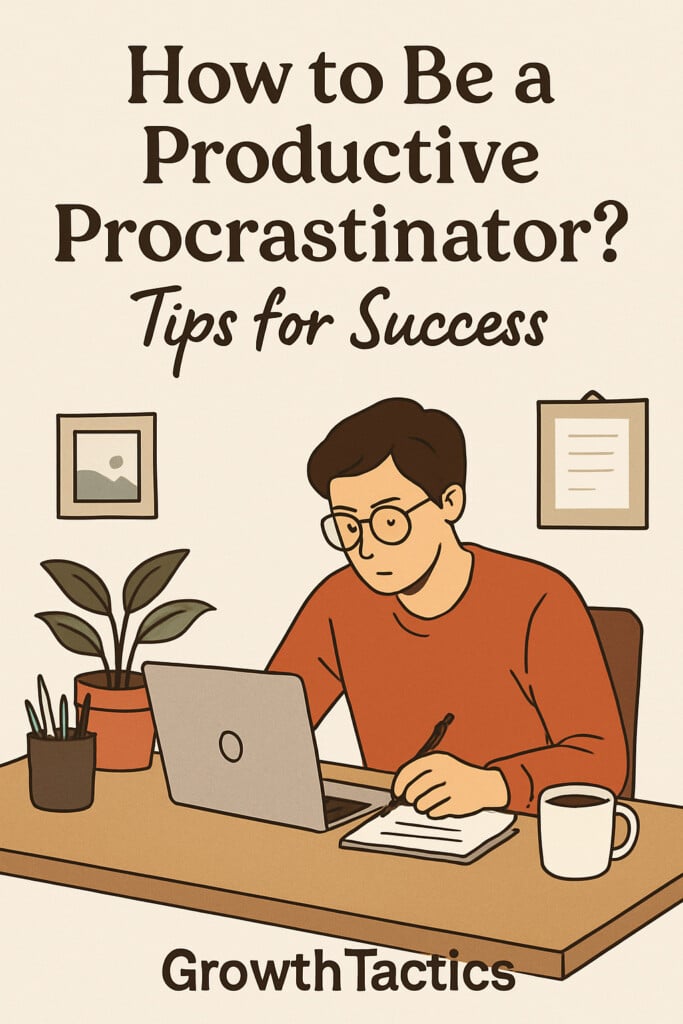
You stare at the blinking cursor on your screen. You know you have a major deadline approaching. Instead of typing, you suddenly feel the urge to reorganize your bookshelf by color.
Does this sound familiar? You are not alone. Almost everyone puts things off occasionally. We often label the typical procrastinator as lazy or unmotivated. This is usually false. You are likely struggling with prioritization or perfectionism rather than laziness.
You might believe that procrastination equals wasting time. However, there is a way to twist this habit to your advantage. You can actually get things done while avoiding the one thing you are supposed to do.
This article will show you how to turn a common struggle into a secret weapon. You will learn to stop fighting your nature and start leveraging it. Let’s explore how you can become a master of productive procrastination.
Jump To Section
What is Productive Procrastination?
To understand this method, we must first look at the definition of productive procrastination. It is the act of completing beneficial, lower-priority tasks to avoid tackling your most important work. You are still working, but you are skirting around the main event.
This is different from “destructive” procrastination. Destructive procrastination involves watching television, sleeping, or scrolling aimlessly through your phone. Those activities result in getting nothing done. Productive procrastination ensures that your to-do list shrinks, even if the top item remains untouched.
Your brain naturally wants to avoid the anxiety associated with a massive project or task. Large projects feel threatening because they carry the risk of failure.
To soothe that anxiety, your brain seeks a quick win. Completing a small task releases dopamine. This chemical makes you feel good and accomplished. This process offers a unique insight into how you operate. You are not avoiding work; you are avoiding negative emotions.
What Are Some Examples of Productive Procrastination?
You might be doing this already without realizing it. It helps to identify specific scenarios where this behavior shows up. Here are some common examples of productive procrastination that many professionals experience.
Clearing the Inbox You sit down to write a report, but you check your email first. You spend an hour archiving old messages and replying to non-urgent notes. You feel busy and useful. You tell yourself that an empty inbox is necessary for a clear mind.
Organizing the Workspace You decide that you cannot possibly work on a messy desk. You spend the morning filing papers, wiping down surfaces, and arranging your pens. This feels like preparation, but it is often just a delay tactic.
The Research Rabbit Hole You need to write a presentation. Instead of drafting the slides, you spend hours reading background articles. You convince yourself that you need more data. This research feels like work, but it delays the actual creation of the project.
Networking and Client Maintenance You avoid a difficult proposal by calling a client to “check in.” You might attend a networking event or schedule coffee chats. You justify this as maintaining relationships. While valuable, it often serves to push a deadline further away.
How Can You Use Your Procrastination Time Effectively?
If you are going to procrastinate, you might as well be good at it. You can transform avoidance into a legitimate productivity strategy. The key is intention. You must consciously choose tasks that provide value.
Can You Structure Your To-Do List to Trick Your Brain?
There is a clever method called “Structured Procrastination.” This concept suggests that you can manipulate your own psychology. You simply need to adjust the hierarchy of your tasks.
Place your most daunting, scary project at the very top of your list. Then, fill the slots below it with other important tasks. These should be essential items, but ones that feel less intimidating than the top project.
Your brain will naturally try to avoid the top item. To escape it, you will instinctively tackle the second and third items. You become a productive procrastinator by getting significant work done just to avoid the “big one.”
Here is how you might structure a list to trick yourself:
| Priority | Task | Status | Psychology |
|---|---|---|---|
| 1 | Write the 20-page annual report | Avoided | Too scary. |
| 2 | Answer 15 client emails | Done | Feels easier than #1. |
| 3 | Book flights for conference | Done | Productive distraction. |
| 4 | Review team budget | Done | Necessary evil. |
By the end of the day, you accomplish three major things. You manipulated your schedule to ensure that “avoiding” work still resulted in valuable output.
How Can You Use “Tidying Up” to Generate Clarity?
Physical clutter often leads to mental clutter. When you feel stuck, you can use your procrastination time to fix your environment. Organizing your space can solve the feeling of overwhelm that stops you from working.
Cleaning provides a sense of control. When a project feels chaotic, a clean desk feels orderly. This activity can also spark inspiration. While your hands are busy folding laundry or filing papers, your mind is free to wander. You might generate a creative idea for your main project while you are scrubbing the floor.
However, you must be careful. You should not spend the entire day cleaning. Set a timer for 20 minutes. Use that time to reset your space. Once the timer goes off, the clean space should serve as an invitation to focus on your work.
Use Productive Procrastination to Knock Out Administrative Tasks
We all have small, annoying tasks that pile up. These are often low-energy chores that require little brainpower. This is the perfect time to tackle them.
You can use your avoidance time to pay bills or update your computer software. You might finally respond to those social media messages on your business page. These tasks are unnecessary in the immediate moment, but they become urgent if ignored for too long.
Getting these small items out of the way reduces background stress. You clear the decks. When you finally turn to your main project, you won’t have the nagging feeling that you forgot to pay the electric bill. You accomplish something real, even if it wasn’t your main goal.
When Should You Break Free from the Cycle?
Productive procrastination is a useful tool, but it has limits. Eventually, you must break free and face the music. You cannot clean your desk forever.
You need to recognize when you have crossed the line. If you are missing deadlines, you are no longer being efficient. You are simply hiding. This avoidance creates a compounding emotional toll. The guilt grows heavier the longer you wait.
Urgency usually forces action. When the deadline is tomorrow, the fear of failure overrides the fear of the task. However, relying on panic for motivation is unhealthy. It leads to burnout and sloppy work.
Watch for these signs that you need to stop procrastinating:
- You are inventing “busy work” that has zero value.
- You feel a physical knot of anxiety in your stomach.
- Others are waiting on your work to do their jobs.
When this happens, you must stop the side tasks. You have to face the priority head-on.
What Tools and Methods Can Help You Focus?
When you are ready to stop avoiding and start doing, you need the right tools. There are many methods to help you regain focus. You need to find a solution that fits your style.
The Pomodoro Technique This is a classic method. You set a timer for 25 minutes of pure work. Then, you take a 5-minute break. It is easier to commit to 25 minutes than to eight hours. This breaks the work into manageable chunks.
Focus Apps Technology can be a trap, but it can also be a savior. Use an app that blocks distracting websites. If social media is your weakness, lock yourself out of it for an hour. This forces you to look at your work.
The “Five Minute” Rule Tell yourself you will work on the main project for just five minutes. That is it. Usually, the hardest part is starting. Once you break the seal, you will likely keep going.
Identify Your Type Understand your specific type of procrastination. Are you a perfectionist? Then allow yourself to write a “bad” first draft. Are you overwhelmed? Break the task into tiny steps.
Conclusion
You do not need to cure yourself of procrastination completely. You just need to manage it. You can stop feeling guilty about the way your brain works. If you tend to put things off, accept it. Then, use that time to clear your inbox, organize your life, or handle administrative chaos.
The goal is to be a productive procrastinator. You want to reach the end of the day with a list of completed items, even if the order was a bit scrambled.
Take a look at your to-do list today. Give yourself permission to avoid the top item for an hour, provided you tackle the second item with vigor. Embrace your natural habit and steer it toward success. You might find that you get more done than you ever thought possible.